Part of your bookings
can come through your own
website— not only through platforms
Part of your bookings can come through your own website — not only through platforms
Platforms generate the main flow of bookings and remain part of the sales model. There is no need to abandon them.
The goal is to redistribute part of your room inventory. If 10–30% of your rooms are booked directly through your own website, occupancy stays the same — only the structure of your revenue changes.

Around 77% of hotels in Europe operate independently of chains. The average size of such a hotel is about 35 rooms.
This is a business where the owner is directly responsible for occupancy and financial results.
In tourist cities, occupancy during the season stays at around 60–70%, and is even higher during peak periods.
Hotels operate steadily and sell rooms every day.
With the same occupancy, hotels can achieve different financial results. The reason is simple: part of the price of each room goes to platforms as commission.
The monthly result depends not only on the number of nights sold. The difference is often driven not by occupancy, but by the size of the commission.
We calculate based on a conservative price
The booking price is the same on platforms and on your website. For this example, we use €90 per night — a moderate rate for an independent hotel.
In many tourist cities, prices are higher, but we calculate from the lower end — without optimistic assumptions.
If the booking comes through a platform
The average commission of platforms like Booking.com is around 15%.
From €90, that’s €13.50. The hotel keeps €76.50.
If the booking is made directly
Direct bookings also come with costs: payment processing, booking engine, and technical support.
On average, this is about 5%. From €90, that’s €4.50. The hotel keeps €85.50.
The difference is about €9 per night
With the same price and occupancy, the difference is around €9 per room per night.
This is about 10% of the room rate. And this amount adds up every month.
Even 4–6 rooms per day, sold directly, already start to change the economics of a hotel. Occupancy may stay the same — only the way part of the inventory is sold changes.
The number of guests doesn’t increase — although everyone would like that. What changes is who the payment goes through.
Rooms sold direct
per day
Direct bookings per
month (nights)
Monthly financial
impact
Additional revenue
per year
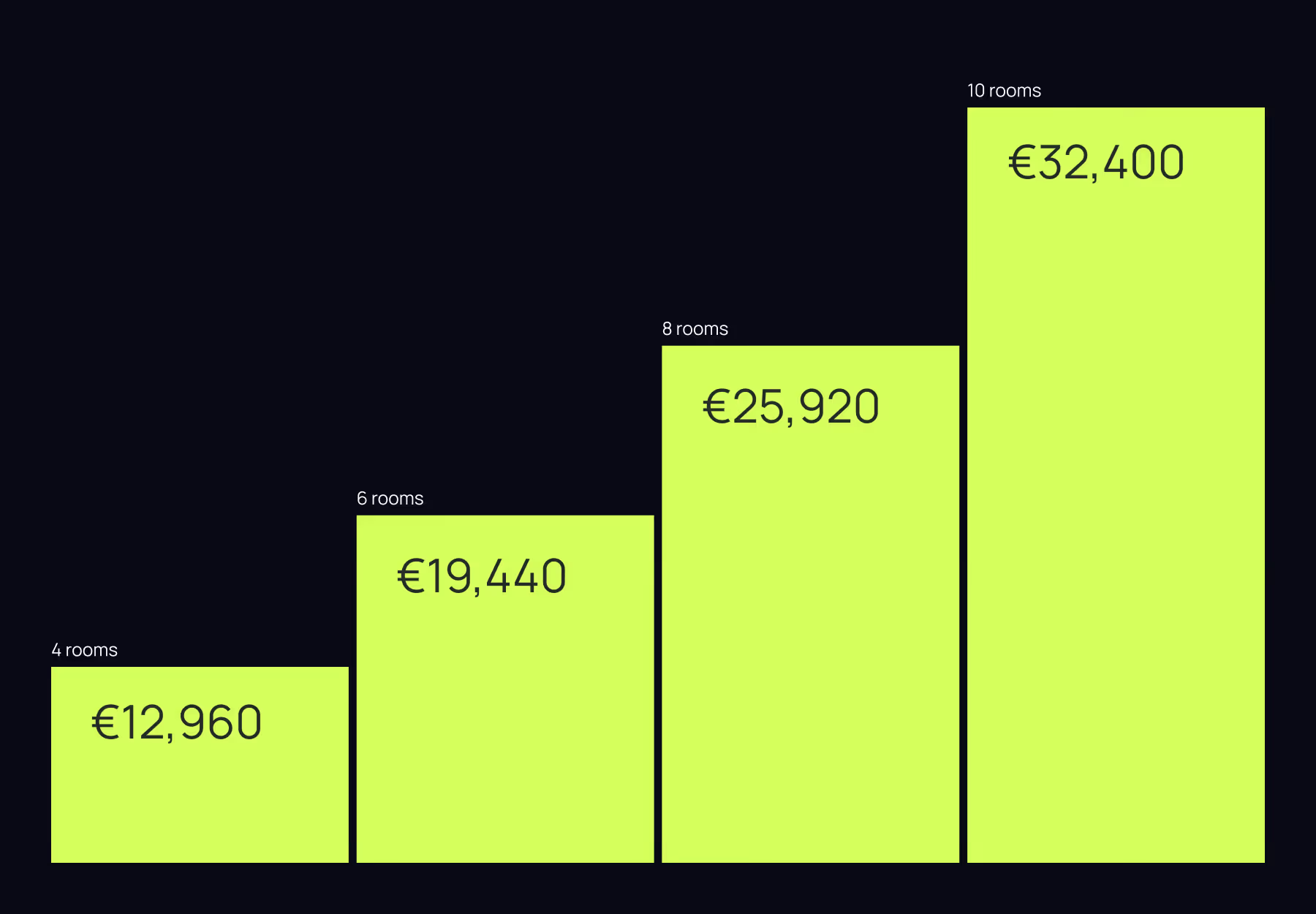
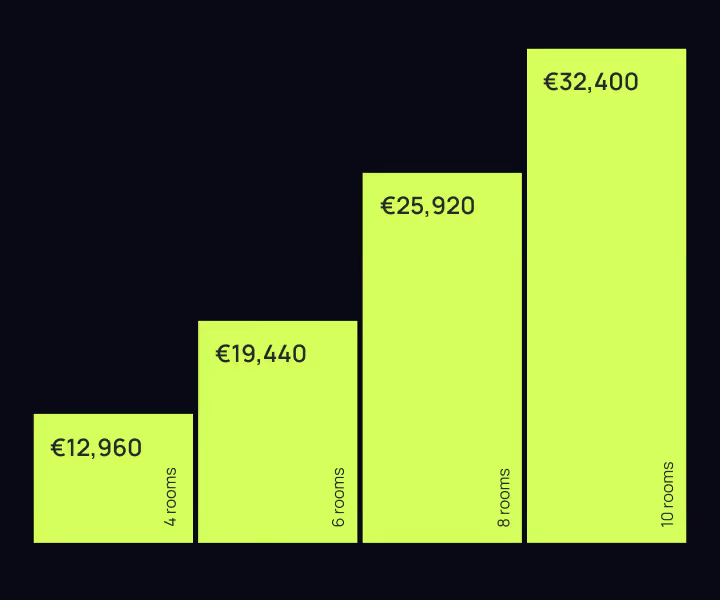
4 rooms
120
€1080
€12960
6 rooms
180
€1620
€19440
8 rooms
240
€2160
€25920
10 rooms
300
€2700
€32400
Bookings made through platforms are cancelled much more often. According to industry data, up to 40–50% of such bookings are cancelled, while for direct bookings the rate is usually around 18%.
This makes occupancy more predictable and reduces the risk of empty rooms.
Guests can book dinner, parking, transfers, or late check-out directly with the hotel. These sales are not subject to platform commissions.
With direct bookings, the hotel receives the guest’s email and phone number. This makes it possible to stay in touch and invite guests back for repeat bookings.
The hotel can clarify stay details, answer questions, and offer additional services even before arrival.
The website allows you to clearly present your restaurant, spa, or conference facilities and offer them to guests.
If the owner has multiple properties, the website can direct guests to other hotels within the group.
See how your hotel’s financial performance can change
We’ll run the numbers based on your data: number of rooms, occupancy, and average rate. We’ll get on a short Zoom call and walk through the economics together. It takes no more than 20 minutes.
Even with a high share of direct bookings, the overall gain remains small and does not always justify the effort.
If there are no repeat guests or brand awareness yet, direct bookings need to be built first. This is a marketing task, not a matter of redistributing sales.
If guests stay for one night and do not return, the potential for repeat bookings is lower.
An exception is locations with a steady flow of the same guests.
If occupancy is below 50–55%, it’s better to focus on increasing demand first, rather than changing the sales channel.
Conditions under which the
model works

If rooms are already being sold, part of the bookings can be shifted to the website. This is not about increasing demand, but about changing the sales channel.
Even 4–8 rooms per day booked directly can already deliver a noticeable financial result.
Direct bookings don’t happen on their own. During the stay, it’s important to:
— offer a small incentive for a return visit.
— collect the guest’s contact details with their consent.
— suggest booking directly through the hotel’s website for the next stay.

The guest has already stayed at the hotel and had a good experience. If, during the stay, they are offered a non-price incentive for their next visit and given the website address, the next booking can happen directly through the hotel’s website.

After viewing a hotel on a platform, some guests search for it by name on Google.
If the website offers the same price and a simple booking process, some of these guests will book directly.

Guests can find the hotel through maps — especially if they already know its name.
In this case, they often go to the official website and book there.

Guests who have already interacted with the hotel can return through reminders or email campaigns.

Direct bookings through the website are not about competing with Booking in search ads, where hotels usually lose on budget and reach. It’s not about new guests, but about those who have already chosen the hotel or stayed there.
If the website offers the same price, the booking process is simple, and the guest has been engaged in advance, some bookings will come through direct channels.
The number of guests doesn’t increase — only who processes the payment changes. And this already creates a noticeable financial benefit.
For direct bookings to happen, a hotel needs a website that helps the guest make a decision. In many cases, the website exists “just in case”:
— a short description
— a few photos
— contact details
Such a website may look neat, but it has almost no impact on how bookings are distributed.
When a guest is already interested in a hotel, they usually have a few simple questions:
— what makes this hotel better than others
— what rooms are available
— how they are equipped
— features and amenities
— the price
— booking conditions
— how easy it is to complete the booking
If the website answers these questions quickly and clearly, a significant share of guests will book directly.
It’s clear that the price on the website should not be higher than on platforms. But the guest’s decision is not based on price alone. In practice, it’s a combination of factors:
— a compelling hotel description
— high-quality photos
— detailed room descriptions
— easy room selection
— a simple booking process
When the website helps guests make a decision, it becomes part of the sales system — not just an informational page.
When working with independent hotels, I often see the same situation: the website exists, but has little impact on where bookings are actually made.
That’s why it’s important to look not only at how the site looks, but also at whether it helps generate direct bookings.
Platforms work like catalogs. They show price, ratings, and photos, and help guests compare options. By design, they are focused primarily on the guest’s interests.
A website works differently. It can present the hotel, rooms, and stay conditions in more detail — and explain why guests should choose and book this particular hotel.
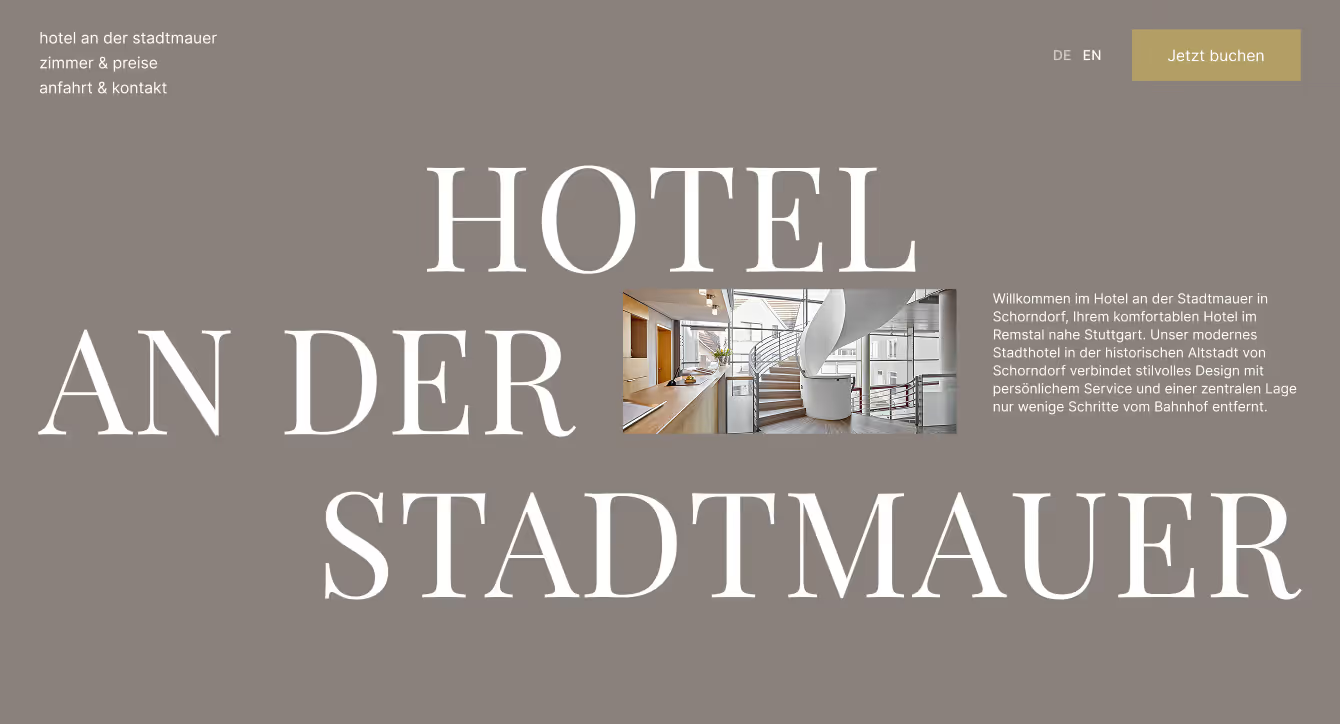
An independent hotel in Schorndorf with bookings coming through both platforms and its own website.
Result: with the same price and a convenient room selection, part of the bookings goes through the website instead of platforms.
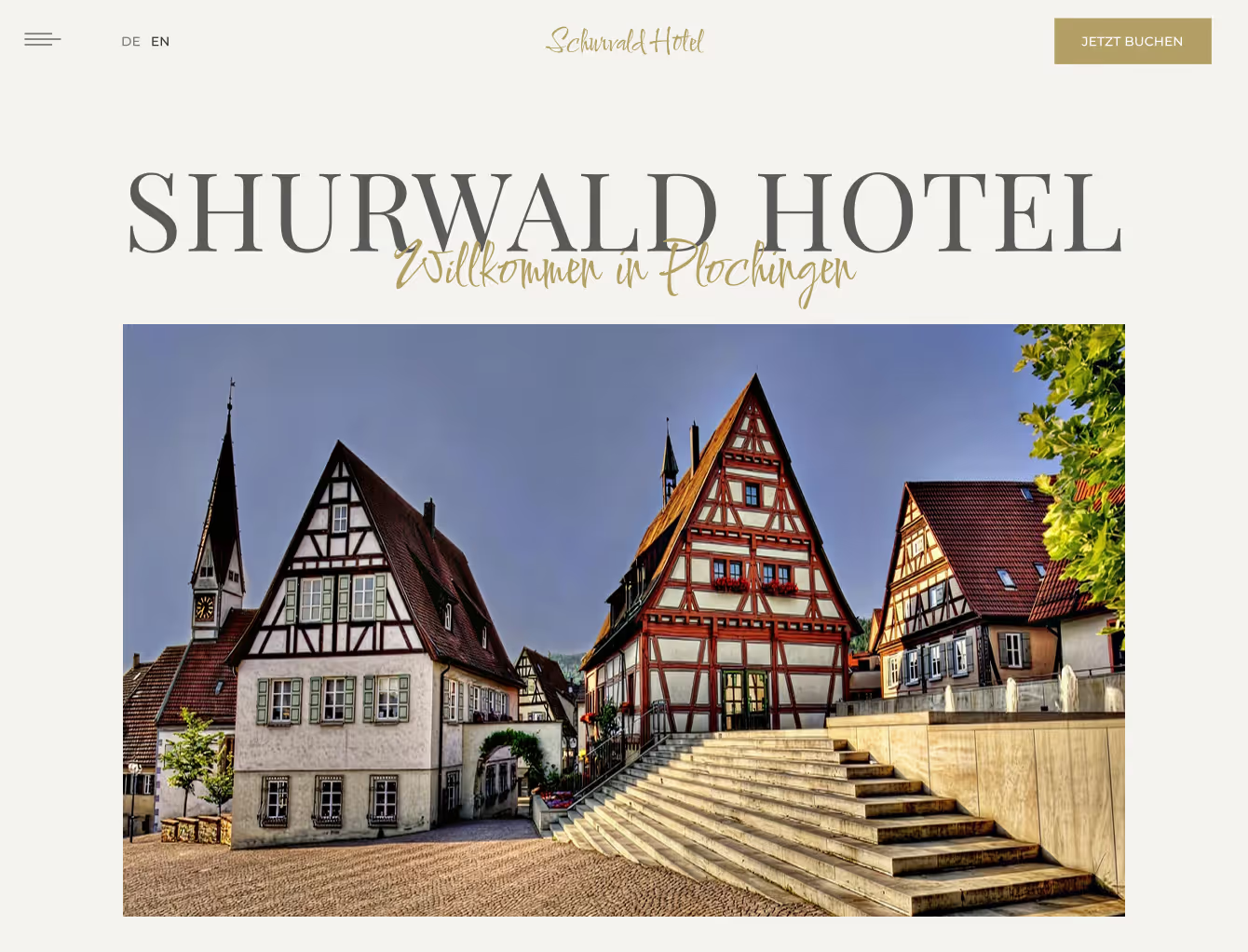
A typical independent city hotel in Plochingen with bookings coming through platforms and its own website.
Result: with a comparable level of convenience, part of the bookings goes through the website instead of platforms.
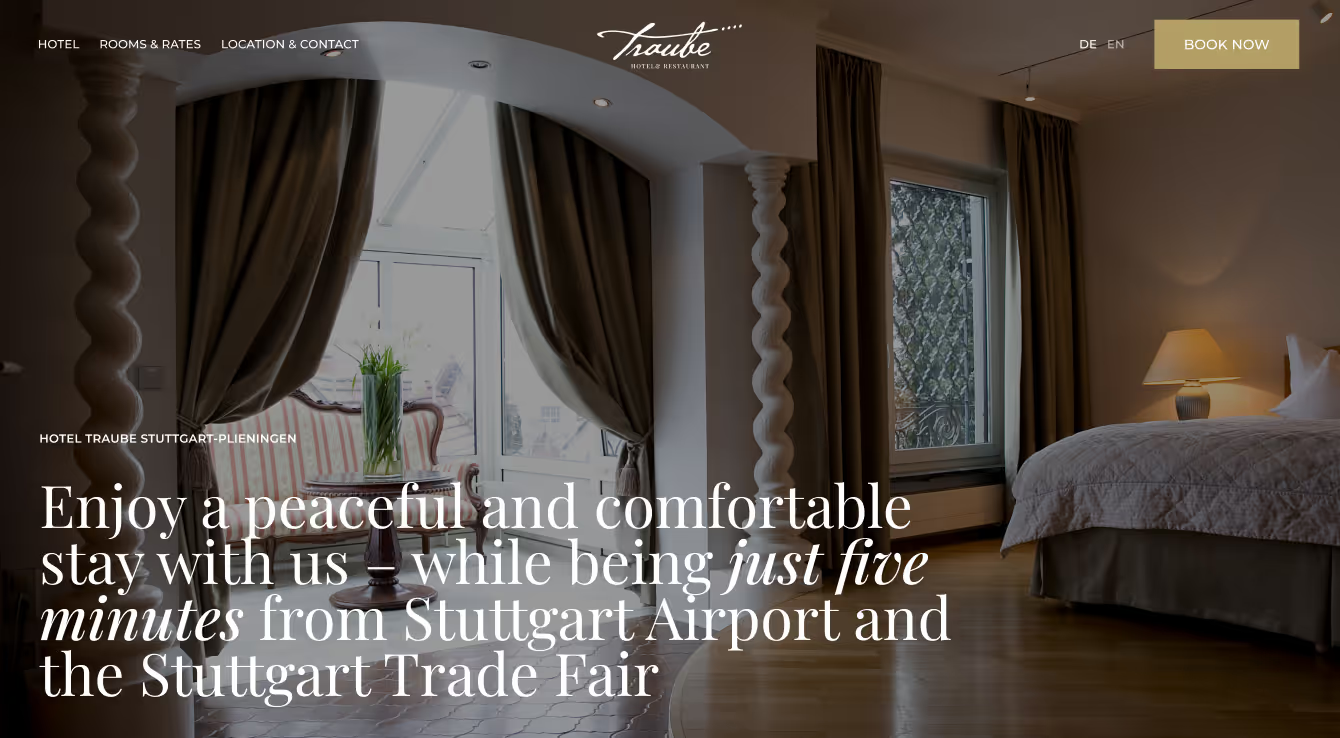
An independent hotel near Stuttgart. Bookings come through both platforms and the hotel’s own website.
Result: the website provides an alternative booking channel, and some guests choose it instead of platforms.

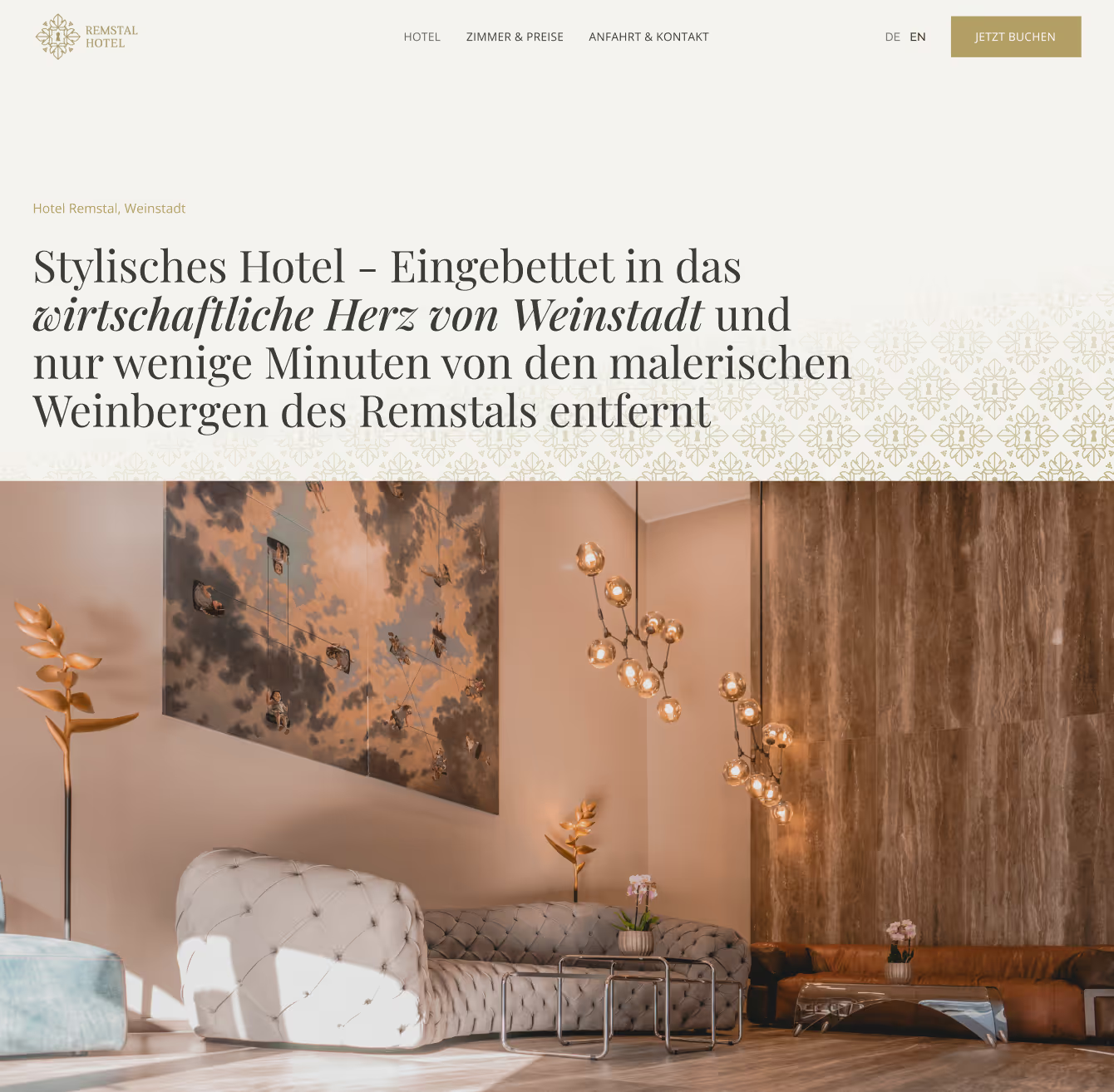
An independent hotel in the Remstal region. Bookings come through both platforms and the hotel’s own website.
Result: with a clear structure and the same pricing, part of the bookings naturally shifts to the website.

A hotel in a historic building in Waiblingen. Bookings come through both platforms and the hotel’s own website.
Result: the website becomes an alternative to platforms, and some bookings happen directly.


